
Global: Petiole Sap Nitrate Should Fall From 1,200–1,600 ppm Early to About 400–700 ppm by Late Bulking
Transporte clave
- 1,200–1,600 ppm sap nitrate is the target at tuberization
- 800–1,199 ppm is the NDSU target for early July bulking
- 400–799 ppm is the NDSU target from mid-July to mid-Aug
- 20–60 days after emergence is the peak N uptake period
Por que importa
- Para os agricultores
- Sample the same petiole position every week from tuberization and compare sap nitrate with the falling stage target before each top-up
- Para procesadores
- Ask contract growers for petiole records, because late excess nitrogen can delay maturity and lower dry matter
- Para provedores
- Offer petiole testing with fast turnaround during bulking, since weekly results are only useful if they arrive before the next fertigation
Resumo de 60 segundos
In-season petiole sap tests work best when read against a falling target rather than one number. Extension specialists in North Dakota and Minnesota both set 1,200 to 1,600 ppm nitrate for irrigated Russet Burbank at tuberization, then roughly halve the target in early July and again from mid-July. The two lists differ only at the upper edges of the later ranges. Minnesota advice places the heaviest nitrogen demand 20 to 60 days after emergence, and Idaho guidance wants about half or more of total nitrogen on before rows close. North Dakota has gone further and stopped linking rates to yield goals, while Minnesota tables still use them. For agronomists this means front-loading nitrogen, then using petiole data to fine-tune top-ups during bulking. The ranges come from one variety in one region, so other cultivars and climates need their own calibration before growers adopt the numbers.
Petiole testing tells a grower whether the crop has enough nitrogen during the season. The target is not fixed. It falls as the crop moves from tuber initiation to bulking and maturity.
North Dakota State University publishes sufficiency values for petiole sap nitrate in irrigated Russet Burbank. They are in publication SF715, revised in January 2021:
- 15–30 June, vegetative growth and tuberization: 1,200–1,600 ppm;
- 1–15 July, tuber growth and bulking: 800–1,199 ppm;
- 15 July to 15 August, bulking and maturation: 400–799 ppm.
The University of Minnesota Extension gives the same early range of 1,200–1,600 ppm. Its later ranges are slightly narrower: 800–1,100 ppm for early July and 400–700 ppm from mid-July to mid-August. The page was reviewed in 2024 by the extension specialist Carl Rosen.
Días laborables. Cancelar a subscrición cun só clic.
When the crop takes up nitrogen
Minnesota advice puts peak nitrogen uptake between 20 and 60 days after emergence. Growers should plan most nitrogen inputs from 10 to 50 days after emergence. One third to one half of the recommended rate can go on at or around emergence, with starter nitrogen banded at planting.
A University of Idaho guide for Russet Burbank gives a similar picture. About 50 to 60 percent of the total nitrogen requirement should be applied by the time the rows close, it says.
Yield goals are no longer the basis
The two Midwest services differ on one point. North Dakota dropped yield goals from its fertilizer advice. Research has shown that no link exists between expected yield and nitrogen rate, the university wrote. Its rates now depend on variety type and vine-kill date. Minnesota tables still group rates by yield goal and previous crop. For example, a 400–449 cwt/acre goal after alfalfa on low organic matter soil gets 100 lb N/acre. After a Group 2 crop, the rate is 160 lb N/acre.
Por que importa
Too little nitrogen during bulking cuts yield. Too much late nitrogen delays maturity and skin set, and it can lower dry matter. Petiole ranges give a simple weekly check between these two risks.
The ranges apply to one variety under irrigation in the Midwest. Other varieties and climates need local calibration. Sampling method also matters. Growers should use the same petiole position and the same laboratory each week, so that the trend is reliable.
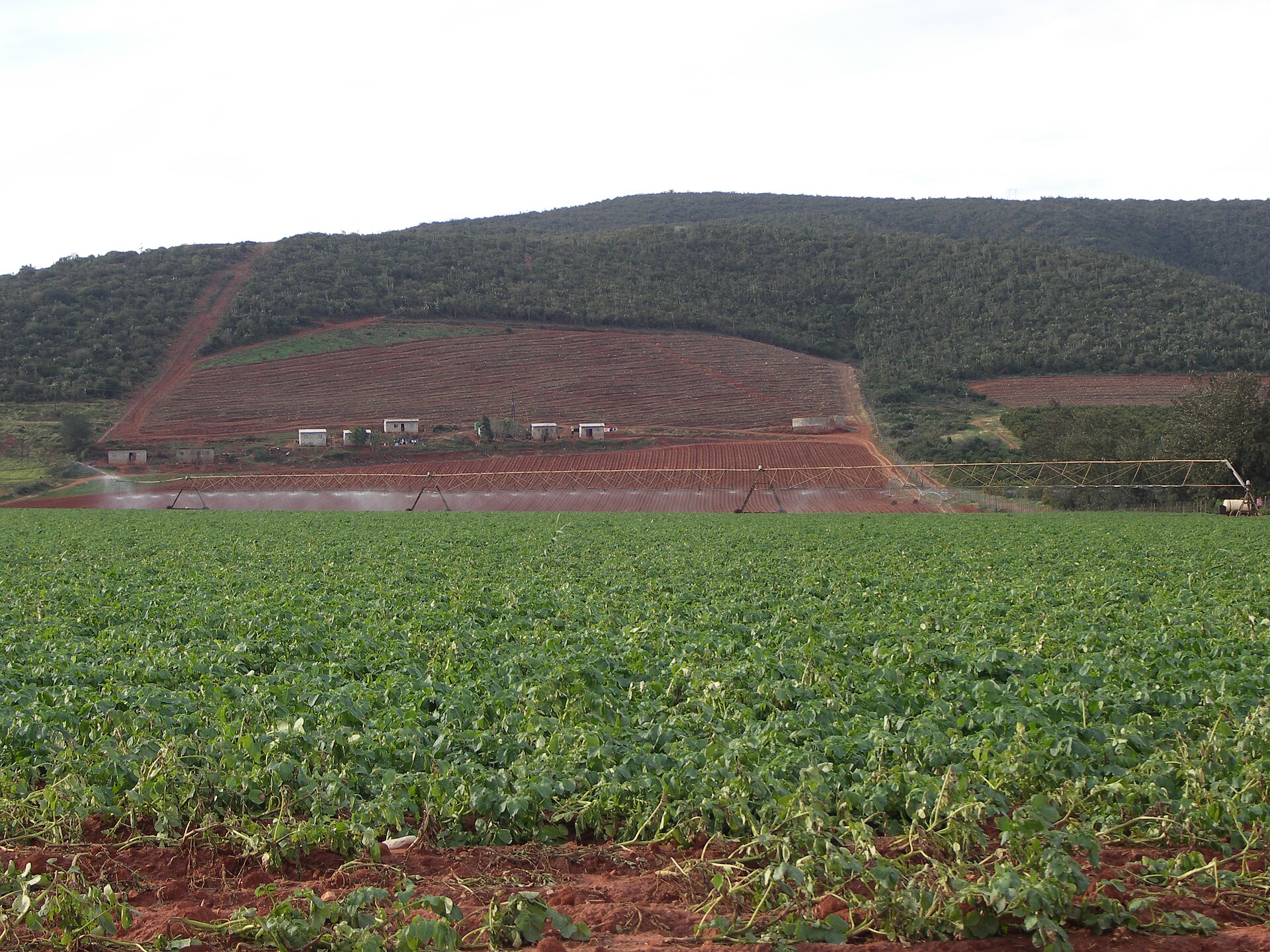
Photo: A potato field under centre-pivot irrigation near Patensie, South Africa (illustrative). NJR ZA / Wikimedia Commons, CC BY-SA 3.0
Resumo global da pataca
As cinco mellores noticias, prezos, alertas de enfermidades e eventos. Mañás entre semana, sen publicidade.
Fontes
- NDSU Extension SF715 — Fertilizing Potato in North Dakota (revised January 2021) — https://www.ndsu.edu/agriculture/extension/publications/fertilizing-potato-north-dakota
- University of Minnesota Extension, C. Rosen — Potato fertilization on irrigated soils (reviewed 2024) — https://extension.umn.edu/crop-specific-needs/potato-fertilization-irrigated-soils
- University of Idaho Bul 840 — Nutrient Management Guidelines for Russet Burbank Potatoes (2004) — https://objects.lib.uidaho.edu/uiext/uiext25485.pdf
Ligazón neste material
- país
- Mundo
- Seccións
- AgronomíaNoticias- HUASHIL
Historias relacionadas

Global: o control dos boscálidos contra a praga temperá caeu do 70–75 % ao 30–40 % nos ensaios de campo suecos

Global: O escaravello do Colorado sobrevive aos piretroides mentres a mortalidade cae ao 0–55 % a taxa de campo


